
Stanislava Milankov on Financial Investigations
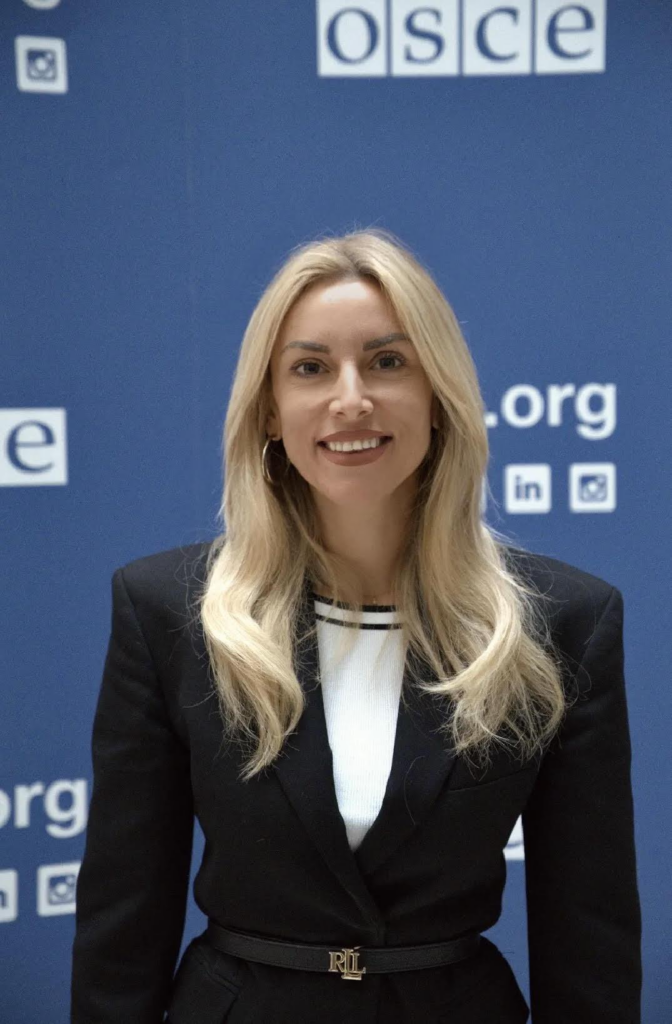
Stanislava Milankov is a Project Associate at the Organization for Security and Co-operation in Europe (OSCE). In this interview, she discusses how cross-border cooperation and public-private partnerships help authorities trace illicit financial flows and investigate crypto-related crime, including emerging money laundering typologies involving stablecoins and cross-chain transactions.
1. What role do international organizations and cross-border cooperation play in strengthening responses to financial crime, virtual asset-related risks, and other emerging threats?
Virtual asset transactions can move across multiple jurisdictions within minutes, and the service providers, infrastructure and users involved are often located in different countries. No single authority can address these risks alone, which makes cross-border cooperation essential. This is where international organizations play an important role. Depending on their mandate, they can offer a secure platform for investigations and joint cases, as well as technical assistance and capacity building.
At the OSCE, within the project Innovative Policy Solutions to Mitigate Money Laundering Risks of Virtual Assets, we currently support participating States across Eastern Europe, Central Asia, Mongolia and the South Caucasus in strengthening their regulatory and investigative responses to the money laundering and terrorism financing risks associated with virtual assets. We work closely with central banks and regulatory authorities to implement Financial Action Task Force (FATF) Recommendations 15 and 16, providing legal and technical support. We also support law enforcement agencies and financial intelligence units in building financial intelligence, applying blockchain analytics and tracing, and investigating illicit financial flows, while strengthening public-private partnerships.
This support matters most where risks evolve fastest, and virtual assets are a clear example. Criminal networks increasingly replicate their modus operandi across different crime types, so illicit financial flows may be linked to multiple forms of criminal activity. To follow the money, authorities need to understand how different crimes and predicate offences converge, and whether their anti-money laundering and countering the financing of terrorism (AML/CFT) measures and financial investigations reflect these linkages. No single country can build that picture alone. International organizations, such as OSCE, with their networks and field presence, are well placed to provide legal and technical expertise, build capacity and help create a shared, cross-border understanding that practitioners can act on.
2. What do you think is most important for building stronger cooperation between institutions working on digital security and crime prevention?
Establishing a public-private partnership (PPP) framework is the most important step in my opinion, with regular exchanges between financial intelligence units, law enforcement, regulators and the private sector on criminal typologies, trends and risk indicators. These partnerships can take different forms depending on national needs, but they all build trust and give institutions a shared, up-to-date picture of the threat. The private sector, whether virtual asset service providers or banks, plays an increasingly important role as the first line of defence, often seeing suspicious activity before authorities do. That is why bringing them into the picture is crucial, for both prevention of crime and effective countering.
3. Could you tell us a little about your contribution to the Digital Forensics Conference 2026 and what attendees can expect from your session?
My session, “Crypto Crime Investigations 2.0: Stablecoins, Cross-Chain Laundering, and Compliance Intelligence,” will look at how the investigative landscape is changing. I will cover how stablecoins are being misused and the typologies of laundering. We will also discuss cooperation with exchanges and information sharing between law enforcement and virtual asset service providers (VASPs), looking at different public-private partnership models, both strategic and tactical. Finally, drawing on lessons learned from OSCE capacity building and technical assistance, we will address what regulators and investigators need to keep pace with these developments.
4. Why do you think conferences like the Digital Forensics Conference are important for professionals working in this area?
Conferences like the Digital Forensics Conference are a great opportunity for professionals to connect, exchange ideas and learn from concrete cases and investigations. They also offer a chance to engage directly with the private sector and learn about the tools, data and expertise it brings.